How to choose a padel racket. A complete guide
Choosing the right padel racket has a huge impact on your power, control, comfort and even risk of injury. The best padel racket is the one that fits your level, style of play and physique, not just the one your favorite pro uses.
How to choose padel racket?
Your level: As a beginner you should choose a light, round padel racket with a big sweet spot to get maximum control and comfort. As an intermediate player a teardrop padel racket gives you more power while still being easy to handle. As an advanced player you can move to a diamond-shaped or stiffer padel racket to maximize power and precision.
Your playing style: If you are a defensive control player who likes to place the ball, a round padel racket with low balance and a softer core suits you best. If you are an offensive power player who loves smashes and aggressive shots, a diamond-shaped padel racket with higher balance and often a harder core will give you more power. If you play all-round, a teardrop padel racket with medium balance is a safe choice that works in both defense and attack.
Weight: A lighter padel racket is easier to move, gives faster reactions at the net and feels more comfortable during long matches. A heavier padel racket provides more power and stability in your shots, but it can be tougher on the arm. If you have or have had elbow or shoulder problems, choose a lighter and softer padel racket to reduce strain.
Shape and balance: A round padel racket with low balance gives high control and comfort and is perfect for players who prioritize precision. A teardrop padel racket with medium balance offers a nice mix of power and control and fits most players. A diamond-shaped padel racket with high balance puts more weight in the head and gives maximum power, but demands better technique.
Core and surface (hard vs soft): A soft EVA core in a padel racket gives more comfort, a softer feel and helps you generate power even at lower swing speeds. A hard EVA core gives a more solid, direct feeling with higher precision and power for experienced players who hit hard. Soft is usually better for comfort and beginners, while hard suits advanced players who want maximum control in their attacking shots.
Grip size: The right grip size on your padel racket lets you hold the handle relaxed, control the racket better and avoid unnecessary strain on your forearm and elbow. You adjust the thickness with overgrips until the handle feels stable without forcing you to squeeze too hard. A correct grip size gives you a better feel in every shot and reduces the risk of injuries.
Weight ranges on padel rackets explained
Most padel rackets weigh between 340–390 grams (without overgrips):
Light padel racket: 340–360 g
Easier to move, quicker in volleys and at the net. Better for beginners, smaller players, and players with arm or shoulder issues. You will get slightly less power on smashes.
Medium padel racket: 360–375 g
Good balance between power and control. Fits most intermediate players.
Heavy padel racket: 375–390 g
More power and stability in shots. Requires good technique and strength. Can be more demanding for the elbow and shoulder.
Every extra overgrip adds a few grams, so the real weight of your padel racket on court is usually higher than what’s printed on the frame.
What form of padel racket is best?
There is no single “best” form it depends on how you play. The three main padel racket shapes are: Round padel racket, teardrop padel racket and diamon padel racket.
Round padel racket
Shape: round head, sweet spot in the center.
Balance: usually low balance (weight closer to the handle).
Characteristics: Maximum control, biggest and most forgiving sweet spot and very comfortable and arm-friendly.
It’s best for beginners, defensive players who prioritize comfort and control but also players with injuries.
Teardrop padel racket
Shape: mix between round and diamond, “drop” form.
Balance: usually medium balance.
Characteristics: Great all-round combination of power and control. Sweet spot slightly higher than round rackets, but still quite forgiving.
The teardrop padel racket fits intermediate and advanced players who are all-round. It fits the player that want to do everything with the same padel racket.
Diamond shaped padel racket
Shape: diamond head, wider at the top.
Balance: usually high balance (head-heavy).
Characteristics: Maximum power on smashes and overheads. Sweet spot is higher and smaller which means less forgiving. Can feel “heavier” in the head (top of the racket).
A diamond shaped padel racket suits the advanced and the professional player that is aggressive and who finish the point with power. If you have good technique and good timing you can also use it.
What is the sweet spot on a padel racket?
The sweet spot on a padel racket is the area on the hitting surface where the ball feels:
Most comfortable, most powerful and most controlled. When you hit the ball in the sweet spot the racket vibrates less, gives you more power and better precision. The position of the sweet spot changes with the shape of the padel racket:
Teardrop racket: sweet spot is slightly higher than center, medium size.
Diamond racket: sweet spot is high up towards the top, smaller and more demanding. Round racket: sweet spot is in the center, large and forgiving.
If you are a beginner or struggle with timing, a round padel racket with a large sweet spot is usually the best choice.
Hard or soft padel racket – which is right? (EVA core)
Inside a padel racket there is a foam called EVA (or sometimes FOAM). EVA comes in different densities, often described as soft, medium or hard.
Soft EVA padel racket
Feel: softer, more trampoline effect.
Benefits: More comfort and vibration absorption. Easier to generate power at low and medium swing speeds. Forgiving on off-center hits.
Best for: Beginners and intermediate players. Players with arm or shoulder issues. Colder climates or slow balls (where you need extra help with power).
Hard EVA padel racket
Feel: stiffer, more solid impact.
Benefits: More precision and control for advanced players. More efficient power when you hit hard with good technique. Better performance in hot conditions and with fast balls (so the racket doesn’t feel too “bouncy”).
Best for: Advanced and professional players. Offensive players with powerful strokes. Players who already have good technique and physical strength.
How to choose between hard and soft?
Do you often feel pain in your elbow/shoulder?
Choose a softer EVA padel racket.
Do you play mostly for control and consistency, not only smashes?
Soft or medium EVA is usually better.
Do I hit very hard and want maximum precision in my shots?
A hard EVA padel racket can be the right choice.
The perfect padel grip for your padel racket
The grip on your padel racket is more important than most players think. It affects: Comfort, control and the risk of blisters and injuries. A common injury in padel is tennis elbow.
1. Grip size and overgrips
Most padel rackets come with a basic grip from the factory. Almost everyone adds 1–3 overgrips to reach the ideal thickness.
How do you know if the grip size is right?
Hold the padel racket like you’re shaking hands with it. Between the tips of your fingers and the palm of your hand there should be about a finger’s width of space. If your fingers dig into your palm your grip is too thin, add an overgrip. If you can’t properly wrap your fingers grip is too thick, then remove an overgrip.
Too thin grip: You have to squeeze harder. More tension in forearm and elbow. Higher risk of tennis elbow.
Too thick grip: Harder to control fine movements. Can feel clumsy and less natural.
2. Type of overgrip
Tacky overgrip: more grip and stickiness, good if your hand gets dry or you want the racket to “stay” in your hand.
Dry / absorbent overgrip: good if you sweat a lot, helps avoid slipping.
Change your overgrips regularly. A fresh overgrip can make your padel racket feel like new.
Correct hand grip (continental)
Most coaches recommend a continental grip for padel:
- Hold the padel racket as if it were a hammer.
This grip lets you: Play forehand and backhand without changing hand position. You can easily control volleys, bandejas and smashes. You will reduce injuries and not get as much stress on your wrist and arm.
Use the wrist strap
The small cord on the handle isn’t just decoration. Always use the wrist strap for safety. It prevents the padel racket from flying out of your hand. According to the rules of padel you need to use the wrist strap on your padel racket.

 Kommer snart
 Kommer snart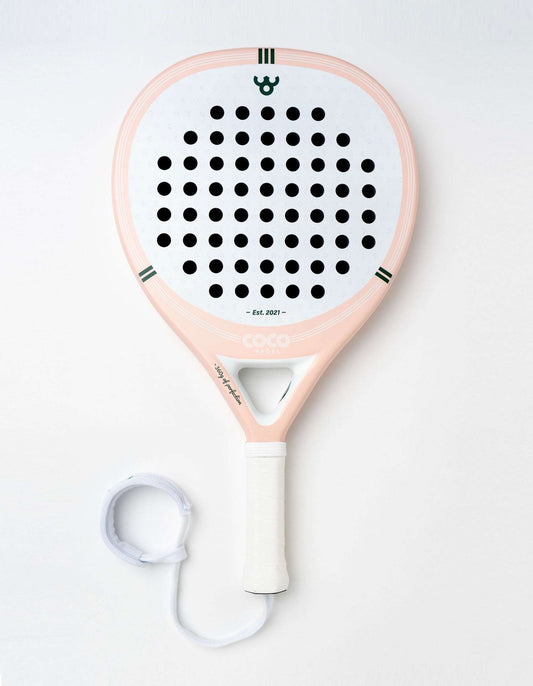
 Kommer snart
 Kommer snart
 Kommer snart

